
A single overloaded router triggered a nationwide ground stop that froze every U.S. flight, exposing air traffic control gear that in some cases dates to the 1980s.
Story Snapshot
- Transportation Secretary Sean Duffy ordered a nationwide ground stop Friday after routers overloaded, causing radar and communication failures.
- Duffy is now demanding $50 billion from Congress, up from an earlier $30 billion ask, to replace aging air traffic control systems.
- A Senate hearing record says Congress already funded modernization for over a decade, pointing instead to the Federal Aviation Administration’s (FAA) failure to execute.
- Government watchdogs have tracked cost overruns and delays in FAA modernization projects for more than 40 years.
Routers Fail, Flights Freeze Across the Country
The FAA issued a nationwide ground stop Friday afternoon after old equipment buckled under data demand. Duffy described the exact moment it happened: “At 3:36 p.m., we experienced instability for our radar and our communications and our centers and our TRACONs across the country”. The outage hit air-route traffic-control centers nationwide, grounding thousands of flights for more than four hours.
Duffy told reporters the breakdown traced back to “old switches, old routers” that got overwhelmed with data and simply failed. Homeland Security Secretary Markwayne Mullin joined him at the briefing, backing up the claim that outdated hardware, not a cyberattack or weather event, caused the shutdown. Flights resumed later that night once the FAA lifted the stop.
Duffy Doubles His Ask to $50 Billion
Duffy had spent months pushing Congress for at least $30 billion in new air traffic control funding before Friday’s outage. That night, he raised the number sharply, telling reporters he now wants $50 billion instead. The jump came fast, turning a months-long funding campaign into an urgent demand tied directly to the day’s chaos.
Congress has not ignored the problem before. Lawmakers approved $12.5 billion last year for aging facilities and technology, money Duffy says is still not enough. The Senate Commerce Committee separately noted Congress already approved $1.9 billion specifically to replace outdated en-route centers, arguing that project deserves priority over broader spending.
Congress Pushes Back on the Money Argument
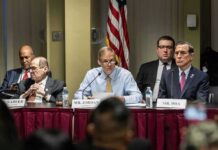
Not everyone agrees the problem is a lack of cash. A Senate hearing record states plainly that the ground stop “was the result of the Federal agency’s inability to modernize despite Congress providing the required resources to do so”. The same record says Congress fully funded a key notification system upgrade for more than ten years, undercutting the idea that money alone was missing.
That creates a sharper question than how much Congress should spend. It asks whether the FAA can actually deliver on funding it already has. The dispute shifts from a simple budget fight into one about agency management, oversight, and whether new billions would fix anything without changing how the money gets used.
Official updates: Transportation Secretary Sean Duffy (@SecDuffy) posted the timeline: telecom issues started ~3:36 p.m. ET at facilities/TRACONs, ground stop issued with 3,500+ planes airborne (all landed safely using standard procedures), airspace reopened at 8:15 p.m. ET. He… pic.twitter.com/LXXsLYtWPZ
— Todays World News (@TodaysWorldNews) November 14, 2026
A Pattern Going Back Decades
Government auditors have flagged this exact tension since the 1980s. The Government Accountability Office (GAO) found that FAA modernization, first estimated at $12 billion over ten years, had ballooned to $35 billion after two decades, with another $16 billion still needed. GAO designated air traffic control modernization a “high-risk” federal program back in 1995, a label it still carries today.
More recent GAO reviews found the FAA still lacks a full lifecycle cost estimate for its newest modernization push, warning the agency may be “prioritizing speed over costs and air traffic disruptions”. For travelers stuck on tarmacs Friday, and for taxpayers now being asked for $50 billion more, that history raises a basic question: will this round of funding finally fix the system, or repeat a cycle of overruns that has outlasted five presidents.
Sources:
youtube.com, abcnews.com, nbcnews.com, abc30.com, fidelity.com, businessinsider.com, cnn.com, congress.gov, tribune.com.pk, gao.gov
© nationalusnews.com 2026. All rights reserved.