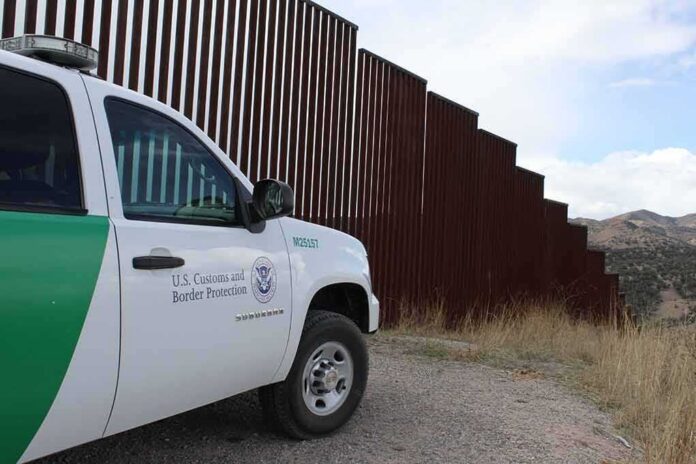
A federal judge halted Big Bend border work after finding the government may have cut legal corners, freezing a high-dollar project and intensifying a national fight over power, process, and place.
Story Snapshot
- A U.S. judge issued a temporary injunction pausing border-barrier work in Texas’ Big Bend region.
- Homeland Security relied on a July waiver to speed construction of barriers and roads across Texas.
- Border officials say the Big Bend scope is roads, sensors, and limited vehicle barriers, not a 30-foot wall.
- Opponents argue the plan harms protected lands and lacks proof that Big Bend is a “high illegal entry” area.
What the Court Did and Why It Matters
U.S. District Judge Kathleen Cardone issued a temporary injunction that stops border-barrier work across the Big Bend region, including inside Big Bend National Park. The ruling does not decide the case. It pauses activity while the court weighs the claims. Plaintiffs said emergency relief was needed to prevent damage to land, habitat, and historic sites. The judge agreed that they showed enough likelihood of success and risk of harm to justify a halt to work for now.
The order hits a major real-world project. Earlier this year, the government awarded about $1.7 billion tied to Big Bend-area work. Officials later said those funds would support vehicle barriers, road access, and surveillance tech rather than a tall steel wall inside the park. The contract shows the scale and speed the administration sought. The injunction now forces a timeout on that momentum and revives questions about scope, siting, and final design choices in sensitive terrain.
What the Administration Says It Planned to Build
The Department of Homeland Security published a Texas-wide waiver in July. It said the secretary would set aside certain laws to ensure fast building of “barriers and roads” along the border. Customs and Border Protection stated in August that Big Bend work focused on one new access road, upgrades to existing roads, detection technology, and targeted vehicle barriers. The agency said it was not building a 30-foot wall or stadium lights through the park and that current activity was survey and design, not wall construction.
Government lawyers also told the court that design choices were still in motion. They said officials were weighing adjustments to reduce impacts and would make a final call before any ground-disturbing work began. That stance aimed to address concerns about park damage and cultural sites. It suggests the government viewed Big Bend as a system build—roads, sensors, and limited barriers—rather than a single continuous wall line across the river corridor.
What Opponents Argue About Need and Harm
Landowners, conservation groups, and local advocates argued the government labeled Big Bend as an area of “high illegal entry” without solid support. They said the administration leaned on broad waiver power to push past environmental and historic protections. They warned that the plan could fragment riparian habitat, raise flood risk, and damage sacred and historic places. The lawsuit framed the corridor as remote and ecologically rich, with limited crossings compared with other sectors.
Opponents also said early bulldozing and staging had already scarred sensitive ground. They argued that once heavy work starts, losses are permanent, and money cannot fix them. Those claims helped convince the court that a pause was necessary while legal questions get tested. Their case does not end the project. But it forces the government to show its work: why this place, why this design, and why waivers should trump other laws here, now, and at this scale.
The Bigger Stakes for Power, Process, and Trust
The clash reflects a deeper fight that crosses party lines. People on the right and left worry that Washington moves fast for insiders, slow for everyone else, and often skips basic guardrails. Here, the government used a sweeping waiver tool to speed work in a national park region. Supporters see a needed security build. Critics see a shortcut that shrinks public input and oversight in the name of urgency, with little site-specific data in public view to prove the need.
A federal court in Texas on Friday issued a ruling temporarily blocking the Trump administration from building a border wall and other infrastructure across the state’s Big Bend region.https://t.co/3TKLemS7WB pic.twitter.com/HbEyhNHus6
— WGNO-TV (ABC) New Orleans (@WGNOtv) October 3, 2026
The administration faces a core trade-off: faster builds can reduce illegal crossings and smuggling, but fast tracks can erode trust if the public cannot see the evidence, the maps, and the safeguards. Border officials say this is not a towering wall through Big Bend, but roads and tech plus strategic vehicle barriers. The court’s pause creates space to clarify the record. Clear plans, data on crossings, and honest timelines would help the public judge whether the project fits the place.
Sources:
nypost.com, federalregister.gov, cbp.gov, texastribune.org, cbsaustin.com, clickorlando.com
© nationalusnews.com 2026. All rights reserved.