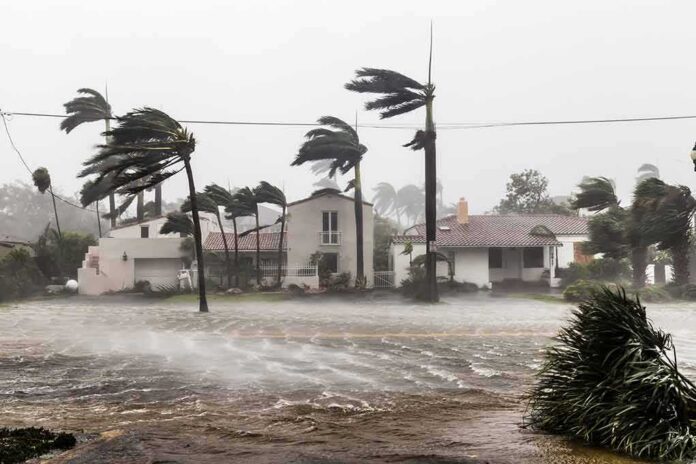
A powerful Thanksgiving storm knocked out electricity to more than 836,000 U.S. customers and upended holiday plans across several regions.
Story Highlights
- More than 836,000 customers lost power at the peak, with the biggest impacts on the East Coast.
- Heavy rain, strong winds, and coastal flooding hit states from North Carolina to New Jersey.
- Wind gusts up to 70 miles per hour toppled trees and power lines, causing many outages.
- The Macy’s Thanksgiving Day Parade was postponed due to wind, rain, and flooding risks.
Powerful Storm Disrupts Holiday Across Multiple States
Reporters and utility trackers showed widespread outages and travel problems on Thanksgiving Day. More than 836,000 customers lacked power at one point, with major clusters in Virginia, Maryland, and Pennsylvania. The New York Times counted more than half a million outages from North Carolina to New Jersey as heavy rain and wind swept the coast. Missouri and Illinois also saw sizable outages and snow, showing the storm’s reach beyond the East Coast. These impacts hit families as they gathered for the holiday.
Airlines and airports faced delays and cancellations as the storm crossed major travel hubs. News reports pointed to hundreds of canceled flights and more than 1,000 delays in the busy holiday window. Reuters also described flight disruptions up and down the East Coast. Wet runways, low clouds, and strong crosswinds can slow takeoffs and landings. That ripple effect pushes crews and planes out of place. Many travelers arrived late or had to change plans on the fly.
Wind, Rain, and Flooding Drove the Outages
Wind gusts reached up to 70 miles per hour in places, which was strong enough to bring down trees and lines. Local forecasters warned that 60 to 70 mile per hour gusts could snap limbs and cause scattered outages, and that is what many communities saw. On the coast, high tides and strong onshore wind raised water levels. Streets flooded, and some shore roads closed. Crews worked to clear debris while utilities tried to restore power safely and in stages.
These hazards came fast and hit many systems at once. Saturated ground made trees easier to uproot. Lines that survived the first wave sometimes failed later as winds shifted. Utility workers had to wait for winds to ease before they could use bucket trucks. In some neighborhoods, the fix was as simple as restringing a span. In others, broken poles and large fallen trees slowed repairs. Restoration times varied by damage and access for crews.
New York City Parade Postponed and Coastal Areas Strained
Officials postponed the Macy’s Thanksgiving Day Parade for the first time in its century-long history, citing wind, rain, and flooding risks. Parade balloons are subject to strict wind limits for safety. Gusty conditions made it unsafe to guide large inflatables along city streets. The decision, while rare, matched broader safety steps in the region, as city leaders warned residents to secure loose items and avoid flood zones. Many families adjusted plans and watched coverage from home.
Coastal towns dealt with street flooding and power hits at the same time. High water blocked some routes, which slowed crews trying to reach outages. Local governments urged drivers not to move barricades and to avoid walking through floodwater. Transit and rail lines made service changes as tracks and stations took on water. Even where lights stayed on, businesses saw fewer customers, and some cut hours due to staff travel delays.
Why This Matters Beyond One Holiday
Thanksgiving storms draw sharp attention because they affect millions on the same day. But the pattern is larger. Climate and energy groups have tracked a rise in weather-driven outages over two decades, with severe weather playing the biggest role. Government energy data also show that outage length and frequency swing widely year to year as big events stack up. That context helps explain why one storm can push systems past their limits when it overlaps with peak travel and tight schedules.
Here is the latest detailed infographic and storm summary from our Thanksgiving 2026 Coastal storm. #mawx #riwx #ctwx pic.twitter.com/lvXWoCpQXW
— SNE Amateur Radio Skywarn (@WX1BOX) November 27, 2026
Families who lost power dealt with spoiled food, unsafe roads, and no heat in cold spots. Communities leaned on neighbors, churches, and local shelters. For leaders on both the left and right, the lesson is practical. Stronger trees and power line plans, smarter grid upgrades, and clear alerts can cut future harm. Voters are tired of fragile systems and slow fixes. They want basic services to work, holidays or not. Storms like this set the test. Meeting it builds trust; failing it breaks it.
Sources:
facebook.com, nytimes.com, lbc.co.uk, nhpr.org, amp.dw.com
© nationalusnews.com 2026. All rights reserved.