Treasury says it has exposed nearly $15 billion moving through Iran’s “shadow banking” and has sanctioned dozens tied to those routes, aiming to choke off Tehran’s last major financial pipeline.
Story Highlights
- Treasury flagged about $14.7 billion in activity potentially tied to Iranian shadow banking.
- Sanctions hit more than two dozen exchange houses, front companies, and personnel.
- Officials describe layered shell companies moving billions for sanctioned Iranian banks.
- Prior cases show named firms routing funds in multiple currencies for defense-linked bodies.
What Treasury Announced And Why It Matters
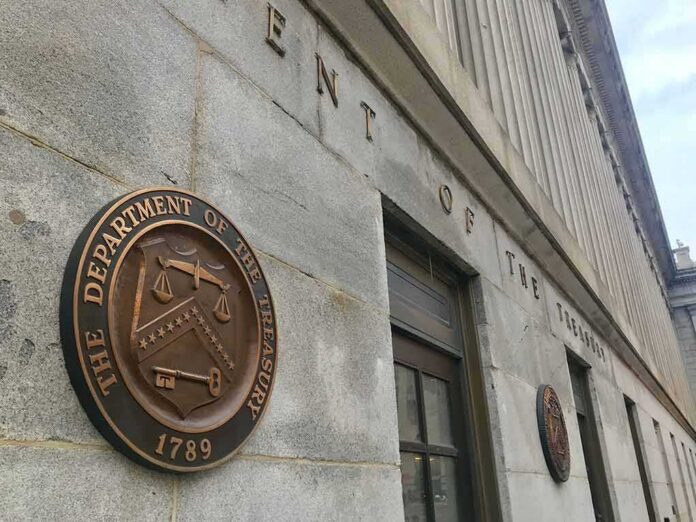
The Department of the Treasury said its Financial Crimes Enforcement Network identified about $14.7 billion in financial activity from January 2025 through August 2026 that was potentially linked to Iranian shadow banking. The Office of Foreign Assets Control announced new sanctions on more than two dozen Iranian exchange houses, front companies, and key personnel. Officials framed the steps as a move to cut Iran’s global access to dollars and other hard currency through hidden channels built to dodge sanctions.
The action fits a pattern Treasury has described over several years. Officials say Iran relies on trusted brokers, offshore fronts, and cut-outs to sell oil, move proceeds, and buy restricted goods. These networks often sit outside formal banking but still touch the international system through layers that hide the true parties. Treasury argues that naming entities, freezing assets under United States jurisdiction, and warning banks forces rerouting, delays, and higher costs for Iran-linked transactions.
How The Networks Allegedly Worked
Earlier enforcement rounds sketched the methods behind the designations. Treasury said Tehran-based exchange houses created foreign “cover companies” to move money for Iran’s Ministry of Defense and Armed Forces Logistics and other sanctioned bodies. The June 2024 action cited Omid Sepah and Hekmat Iranian as examples and described transfers in dollars, Chinese yuan, and United Arab Emirates dirhams through intermediaries for state-linked procurement. These details help explain the latest focus on exchange houses and their offshore partners.
Subsequent actions describe even larger flows. In May 2026, Treasury said an exchange house facilitated hundreds of millions of dollars for sanctioned Iranian persons. In July 2026, officials said targeted exchange houses moved billions of dollars annually for sanctioned Iranian banks through shell companies layered across jurisdictions. These claims show that the government sees a standing system, not a one-off scheme, and that it believes pressure must hit entire networks to matter.
The Scale, The Caveat, And The Stakes For Americans
FinCEN’s total of $14.7 billion provides a sense of scope and urgency, though the agency described it as financial activity “potentially linked” to Iranian shadow banking, not adjudicated illicit transactions. The sanctions are immediate administrative steps, not court rulings. Still, naming entities and warning banks can have real-world effects. Banks often exit risky ties fast, which tightens the net. That is the goal when the United States wants to cut off funding tied to a sanctioned state.
For Americans, the story touches shared concerns about power and accountability. When opaque networks move billions for a hostile regime, it suggests a system where rules bend for insiders. When the government responds, people also worry about blowback: higher energy prices, over-compliance that chills lawful trade, or errors that harm small firms caught in the dragnet. The record shows a repeating cat-and-mouse game. Each round tries to close gaps before new ones appear.
What To Watch Next
Watch whether the designations lead to seized funds, frozen assets, or criminal cases, and whether trade finance tied to Iran slows or re-routes. Track any follow-on advisories to banks and shipping firms. Look for signs of displacement into new hubs, new shell firms, or digital assets. Prior actions named specific conduits and currencies; future releases may add transaction dates and amounts that show where pressure is biting and where new channels form.
Sources:
redstate.com, home.treasury.gov
© nationalusnews.com 2026. All rights reserved.