Mexico released body-camera video of troops seizing FBI Most Wanted fugitive Fausto Isidro “Chapo Isidro” Meza Flores during a violent Sinaloa raid that officials say netted two top targets.
Story Highlights
- Bodycam video shows Mexican troops entering a house and taking Meza Flores into custody.
- U.S. Justice Department says Mexican forces captured Meza Flores on Nov. 20 in Guasave, Sinaloa.
- Mexican Defense Ministry announced the detention; reports tie the raid to wider Sinaloa clashes.
- The arrest follows years on the FBI Ten Most Wanted list and a multimillion-dollar reward.
Army Video Shows Moment of Capture
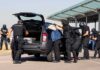
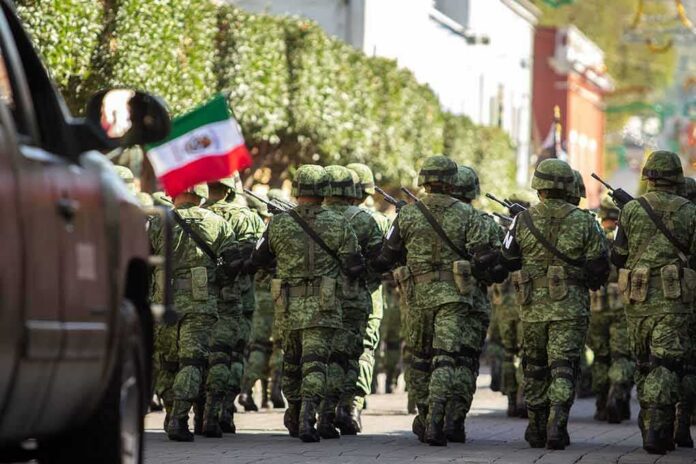
Mexican authorities released body-camera footage that shows armed troops entering a house in Sinaloa and detaining Fausto Isidro Meza Flores, known as “Chapo Isidro.” The video highlights a swift entry and a suspect placed in custody. Associated Press reporting describes the clip as coming from the operation that ended with Meza Flores under guard. Officials presented the video after overnight gun battles and roadblocks flared across the area, underscoring how arrests of senior cartel figures can ignite local violence.
The U.S. Department of Justice said Mexican military forces captured Meza Flores on November 20 during a “spectacular” raid in Guasave, Sinaloa. The announcement places him among the Federal Bureau of Investigation’s (FBI) Ten Most Wanted fugitives, and notes that German Rolando Galvez Meza, known as “El Serafin,” was also arrested in the same operation. The Associated Press reported that Mexico’s Defense Ministry posted news of the detention on social media the following day, confirming the high-level takedown.
Who Was Targeted and Why It Matters
U.S. and Mexican officials have linked Meza Flores to a senior leadership role in the Sinaloa Cartel. The Justice Department statement underscores years of U.S. law-enforcement pressure, including a spot on the FBI Ten Most Wanted list for alleged drug trafficking and violence. Associated Press coverage adds that the U.S. State Department had offered a reward of up to $5 million for tips leading to his arrest, reflecting the scale of alleged crimes and the international reach of his network.
Authorities and researchers have long tracked a pattern tied to Mexico’s “kingpin” approach. Police and military units target top bosses to weaken cartels. Studies show this can disrupt groups, but it can also lead to power struggles and more killings, especially where the capture occurs. A National Bureau of Economic Research working paper found that leadership arrests often raise homicides in the municipality of capture, with complex effects in nearby areas.
Violence Around the Raid and Local Fallout
Clashes erupted around the Sinaloa operation. Reporting describes burning vehicles, blocked roads, and sustained gunfire as security forces pushed to secure targets. One Associated Press account tied the capture to a firefight that left 11 people dead, though a full breakdown of who was killed was not immediately available in public reports. These scenes mirror past kingpin operations, where rapid strikes land a high-value arrest but trigger chaos as armed groups react.
Officials often face a trade-off in these moments. Arresting a cartel boss can remove a key figure from the field. But sudden leadership gaps can prompt rivals and lieutenants to fight for control. That scramble can spill into neighborhoods, shut down roads, and close schools and shops. Evidence from peer-reviewed work indicates that these patterns tend to repeat after major captures, even when the long-term goal is to cut crime.
Cross-Border Stakes for the United States and Mexico
Washington and Mexico City both have strong interests in the case. The Justice Department framed the arrest as the result of a Homeland Security task force investigation and urged continued pressure on transnational drug groups. U.S.-Mexico security cooperation often grows around cases like this one, which can affect not only public safety but also trade talks and migration debates when violence and law enforcement surge along key routes.
🇲🇽🇫🇷 U.S. surveillance drone support helped Mexican forces capture Fausto Isidro Meza Flores, known as “El Chapo Isidro,” over the weekend in Sinaloa, Mexican security officials said Monday. Officials said violence triggered by the detention left 20 people dead in Guasave,… pic.twitter.com/JO1IMfrXHj
— WorldBriefDaily (@WorldBriefDaily) November 24, 2026
For Americans worried about fentanyl, border security, and rising crime, the arrest looks like a win. For Mexicans living near the fighting, it can feel like another night of fear. Both views can be true at once. The lesson, backed by years of data, is that arresting a kingpin is not the finish line. It is the start of a new phase where clear plans, transparent courts, and steady local policing matter most to avoid a fresh wave of bloodshed.
Sources:
youtube.com, ca.news.yahoo.com, apnews.com, justice.gov, en.asiatoday.co.kr, nber.org
© nationalusnews.com 2026. All rights reserved.