At a Cold War-era Nevada tunnel, U.S. officials set off a non-nuclear blast to make it harder for rivals to hide nuclear tests.
Story Highlights
- Energy officials ran a non-nuclear explosion in a Nevada tunnel to sharpen detection of tiny or masked nuclear blasts.
- The test targeted “decoupled” explosions that can hide seismic signals from standard monitors.
- Sensors gathered data to validate models and improve detection algorithms used worldwide.
- The experiment used chemical explosives and radiotracers in the P Tunnel at Area 12.
What Exactly Happened Underground
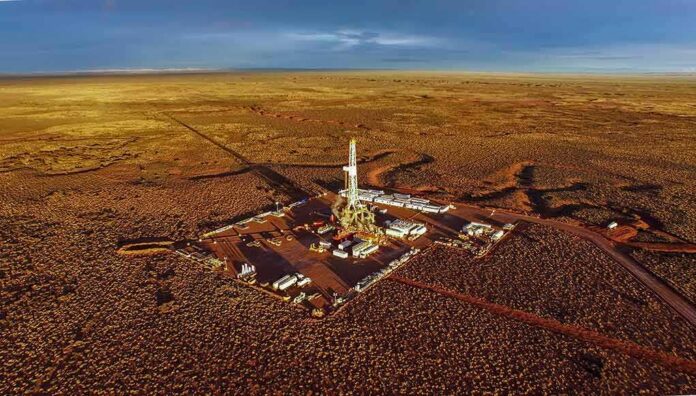
The National Nuclear Security Administration said it conducted a subsurface, non-nuclear chemical high-explosive experiment at the Nevada National Security Site. Officials placed the shot in the P Tunnel in Area 12, a historic underground complex in the desert north of Las Vegas. The blast did not use nuclear material. It used chemical explosives and radiotracers to trace how energy moves through rock and air. The agency framed the work as part of nuclear explosion detection.
The stated goal was clear and narrow: improve the United States’ ability to detect low-yield nuclear explosions, including ones designed to fool routine monitors. Engineers often worry about “decoupled” blasts. In that case, a cavity or special setup weakens the seismic signal, making a small nuclear shot harder to spot. By mimicking key parts of that setup with conventional explosives, scientists can test and tune their tools without breaking treaties or norms.
How The Data Helps Catch Hidden Blasts
Technicians spread instruments across the site to record the event from many angles. Reports describe accelerometers and seismometers for ground motion, infrasound and electromagnetic sensors for air and field effects, and chemical samplers for tracer movement. These data feed physics models that predict how different rock layers, cavities, and yields change signals. Better models mean better algorithms. That improves how global and national systems flag, classify, and locate suspect events.
Scientists have followed this playbook for years. Prior campaigns at Nevada, including source physics experiments, showed how careful, repeatable blasts can sharpen seismology and acoustics. Those efforts help reduce false alarms and lower detection thresholds. Independent technical work also shows that performance depends on geology, sensor networks, and whether a blast is decoupled. That is why agencies run controlled tests to close gaps in hard rock, salt, or other settings.
Why This Matters Beyond Nevada
Rivals know that small or masked tests can speed weapon design without drawing fast blame. That risk pushes the United States to keep detection tools sharp. Better detection supports treaty verification and gives leaders firmer ground in a crisis. Some outlets linked this experiment to concerns about possible low-yield testing by foreign states, but the official language stayed focused on detection improvements, not on any single country’s actions or intent.
🔴 U.S. detonates conventional explosives in Nevada tunnel to simulate concealed nuclear test
The National Nuclear Security Administration conducted a test yesterday in P Tunnel at Nevada National Security Site using chemical high-explosives and radiotracers to replicate a… pic.twitter.com/OMuxj3UUue
— NewsTongue (@NewsTongueX) October 1, 2026
Americans across the spectrum share a worry here: powerful players can bend rules in the shadows while Washington argues. This test tries to counter that. It aims to make cheating harder and evidence stronger. The government did not release a technical scorecard, which is common in nuclear security work. The agency said the data will validate models and refine algorithms used in U.S. nuclear explosion detection efforts, with more analysis still ahead.
Sources:
kolotv.com, inshorts.com, washingtontimes.com, energy.gov, llnl.gov
© nationalusnews.com 2026. All rights reserved.