A new video of a wounded immigrant being detained, while the government withholds key facts, shows how official power can harm trust on both sides of the immigration debate.
Story Highlights
- Homeland Security says the man had a final removal order and is now in custody.
- Homeland Security Investigations, with FBI help, is leading the probe.
- Lawyers say he was a DoorDash driver and was shot during a delivery.
- Public details on why deadly force was used remain unclear.
What Officials Confirmed After the Austin Shooting
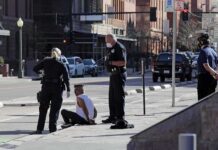
Department of Homeland Security said an officer shot a Venezuelan man in Austin on September 20 during a law-enforcement operation. The agency said the man entered the country during the prior administration and had a final order of removal. Officials said his condition was stable and that he was placed in federal custody pending removal. News outlets described the event as an officer-involved shooting during an enforcement action by federal immigration agents.
Homeland Security Investigations, with help from the Federal Bureau of Investigation (FBI), is leading the investigation, according to multiple reports. Local authorities also engaged after the incident, reflecting a formal process rather than an unexplained shooting. City and state partners, including Austin police and Texas Rangers, were reported to be involved in post-incident steps. These signals suggest the case entered standard review channels used for shootings by federal agents.
What the Man’s Lawyers and Supporters Say Happened
Attorneys for Wilber Rafael Garcés Perez identified him as a DoorDash driver and said he was shot while working a delivery. The legal team said he did not realize the unmarked vehicle was federal agents. One lawyer relayed his account that agents sideswiped his car and then shot him, and denied there was a foot chase, which conflicts with agency claims reported elsewhere. The attorney also said he was moved for questioning with a bullet still near his spine and without pain medicine.
Lawyers further said Garcés Perez entered the United States in 2024 using a Customs and Border Protection scheduling app and applied for asylum. They added that he had no criminal record, which they argue undercuts the need for force. Protesters in Austin demanded more transparency and called for an independent investigation, reflecting public pressure when agencies investigate their own. These claims amplify scrutiny, but they remain advocacy statements absent released forensic evidence.
Key Gaps: Why Force Was Used and How Reviews Will Judge It
Public reporting does not yet explain why the agent fired. Officials have not shared body camera video, dashcam footage, radio logs, or a detailed threat narrative. That leaves open core questions about vehicle movement, perceived danger, and officer positioning at the time of the shot. In these cases, investigators assess whether deadly force met the “objectively reasonable” standard under federal policy and court rulings, including how agents judged an imminent threat.
Wilber Garcés Pérez Faces Denial of Medical Care and Torture in ICE Isolation After Shooting
An asylum seeker shot by ICE agents in Austin remains locked inside the South Texas ICE Processing Center in Pearsall, facing severe medical neglect and punitive isolation.
Wilber… pic.twitter.com/3AsHdzYMMy
— CantStopPoppin (@CantStopPoppin) September 23, 2026
National reporting shows shootings by federal immigration officers have risen in recent years, including several involving vehicles, which complicates split-second judgments for both safety and policy compliance. That pattern fuels concern across the spectrum. Many conservatives see lawlessness and want firm enforcement without mission drift or deadly errors. Many liberals see excessive force and demand independent oversight. Both sides worry when agencies control the facts and delay key evidence.
Why This Matters for Trust in Government
People are angry when a man with a bullet in his back is moved into custody before basic questions are answered. People are also angry when officers face trial by rumor without full evidence. Both concerns are reasonable. Confidence grows when agencies release the timeline, videos, audio, and use-of-force reviews quickly. Confidence shrinks when the same institution investigates itself behind closed doors. Timely, verified records can show if the shot was justified—or if accountability is due.
What to Watch Next
Watch for official release of body and dash camera video, radio traffic, and the incident report. Look for a clear account from supervising officers and any vehicle-forensic results that show paths, impact points, and sight lines. Track whether an outside authority, not just Homeland Security Investigations, reviews the case. These steps can answer the central question: did the agent reasonably believe there was an imminent threat, as policies require?
Sources:
cnn.com, nbcnews.com, npr.org, abcnews.com, reuters.com, bbc.com, deseret.com, cbsnews.com, nytimes.com, fox7austin.com
© nationalusnews.com 2026. All rights reserved.