
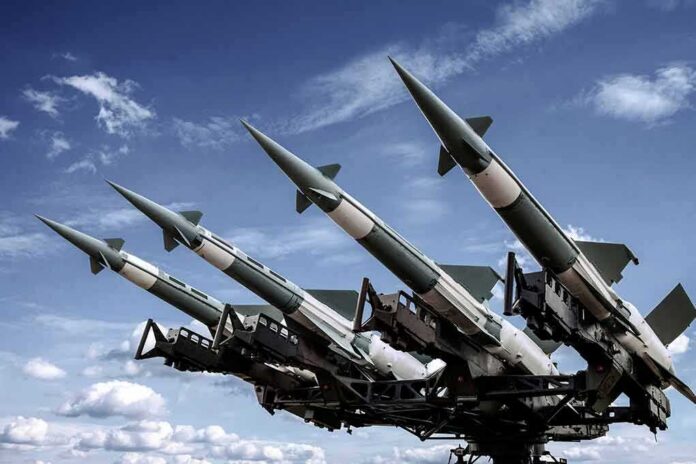
Washington’s 2019 decision to eject Turkey from the F-35 program over its S-400 purchase showed the United States took Russia’s air defenses as a real threat to American stealth aircraft, not a bluff.
Story Snapshot
- The United States blocked F-35 ties with Turkey due to S-400 intelligence risks.
- Russia’s S-400 can detect stealth jets at long range but may struggle to lock them for a shot.
- Public estimates put likely F-35 targeting distances near 20 miles, not hundreds.
- No verified combat has proven S-400 success against F-22 or F-35 fighters.
Why the S-400–F-35 clash matters for U.S. security
United States officials treated the S-400 as a serious intelligence and detection risk. In 2019, the Pentagon started “unwinding” Turkey from the F-35 program after Ankara bought the S-400. Officials warned that operating both systems could expose sensitive stealth data to Russia’s network. That step cost an ally money and access but protected core technology. The move signaled Washington’s view: the S-400 is not marketing hype. It is a capable system that demands caution.
Russia designed the S-400 to defend large areas with layered radar and missiles. Open sources describe a long-range surveillance radar, a separate engagement radar, and missiles advertised out to 380 to 400 kilometers for large targets. Those headline ranges worry planners and taxpayers. But stealth was built to break that chain. The question is not “can the S-400 see anything,” but “can it track and guide a missile well enough, early enough, to kill a stealth jet”.
Detection is not a kill: breaking down the radar chain
Analysts draw a sharp line between detection and a weapons-quality track. Lower-frequency radars can sometimes spot that “something” is there, but they lack the precision to steer a missile to a small, stealthy fighter. The fire-control radar that does guide missiles works at higher frequencies that stealth shaping targets. That is why several public estimates place the window to get a reliable lock on an F-35 much closer than the brochure ranges suggest—often around 20 miles.
Commentary from a former United States Navy operations specialist echoes this view. He argues that while surveillance radars may cue defenses that stealth jets are in the area, the engagement radar likely gains a solid lock only at short range. He places that window at about 20 to 30 miles, with conditions mattering. That gap gives fifth-generation pilots time to shoot first from standoff ranges or avoid the envelope. These are estimates, not declassified numbers, but they track with how stealth is meant to work.
What we know—and do not—about real-world performance
No verified combat has tested the S-400 against an F-22 Raptor or an F-35 Lightning II. Public claims about detecting low-observable aircraft lean on manufacturer specs and demonstrations, not wartime records. One summary notes that the system has not engaged stealth fighters in combat, so its true performance against them remains unproven. A report citing Aviation Week placed detection distances for approaching F-22 and F-35 jets in the tens of kilometers, far below maximum brochure claims.
This gap between lab promise and battlefield proof fuels worry on both sides of America’s political divide. Taxpayers see cost overruns and ask if stealth still pays off. Veterans and working families fear that closed-door deals and defense industry ties leave warfighters to carry risks that elites will never face. The S-400 debate is a reminder: numbers on a slide are not victory. Only a tested kill chain—or one denied—answers the mail.
How this fits the bigger picture of U.S. power and values
For years, United States strategy focused on beating advanced air defenses by lowering the enemy’s odds at each step—detection, tracking, targeting, and missile guidance. Stealth is not magic; it bends those odds in the pilot’s favor. The S-400 tries to reverse that with more sensors and longer-reach missiles. The Pentagon’s hard line with Turkey showed leaders would risk friction with an ally to protect that edge. That choice reflects a larger truth: technology security is national security.
The bottom line is clear. Russia’s S-400 is dangerous. The United States treats it that way. But public data suggests it may not lock a weapons-grade track on an F-35 or F-22 until short range, where American pilots plan to avoid or strike first. Until combat proves otherwise, the smart bet is on tactics, training, and keeping secrets safe from prying systems. That demands vigilance from leaders—and accountability when politics gets in the way.
Sources:
congress.gov, 19fortyfive.com, reuters.com, globalsecurity.org, militarymachine.com, theaviationgeekclub.com, defenseone.com
© nationalusnews.com 2026. All rights reserved.