Amy Acton’s remark likening masked, unidentified federal immigration agents to the Ku Klux Klan has become a flashpoint in Ohio’s governor race, sharpening a national fight over policing, identity, and accountability.
Story Snapshot
- Acton asked whether masked, unidentified federal agents “feel like the Ku Klux Klan,” citing Minneapolis raids.
- Republicans say she compared law enforcement to the Klan and use the clip in attacks.
- Acton later backed local police cooperation with immigration authorities, drawing charges of inconsistency.
- Large Minneapolis deployments and masks reignited debate over officer identification and public trust.
On-Camera Comment Spurs Fierce Backlash
At a City Club of Cleveland event in late June, Amy Acton said masked people in tactical gear were appearing without clear identification and asked, “Does this not feel like the Ku Klux Klan to anyone?” The wording spread fast as a campaign flashpoint. Republican groups said she equated badge-wearing officers with the Klan and highlighted that it was on camera. The Ohio Republican Party amplified the clip in press statements and online posts.
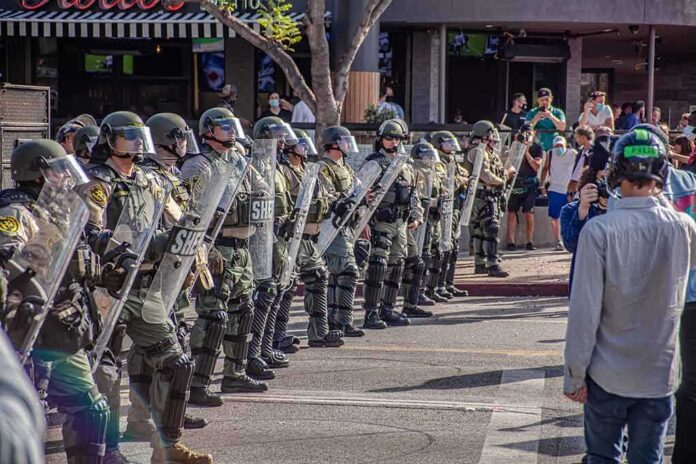
Acton later said critics pulled the line out of context. She argued she was pointing to scenes from federal immigration raids in Minneapolis, where large numbers of masked agents arrived in unmarked vehicles. She framed her concern as a call for professional accountability and clear identification during operations. Her campaign messaging aimed to narrow the meaning to masking and anonymity, not a broad attack on law enforcement as a whole.
Policy Positions Deepen the Political Crossfire
Weeks after the remark, Acton said Ohio police should work with federal immigration authorities and voiced support for qualified immunity. That stance surprised some Democrats and armed Republican critics with a new line of attack. They argued that her support for cooperation clashed with the earlier Klan comparison. Local coverage documented both the initial remark and the later policy position, fueling charges of inconsistency in ads and commentary.
Republican campaigns leaned on the clip to question Acton’s fitness for office, keeping the focus on respect for officers and public safety. They said comparing any police to the Klan offends families who serve. Acton tried to pivot to accountability standards, saying masking and lack of identification during tense operations can erode public trust and raise civil rights concerns for bystanders and targets of raids.
Masking, Identification, and Public Trust in Minneapolis Raids
Minneapolis became a national test case after federal authorities surged thousands of personnel for immigration enforcement. Reports described masked agents arriving in convoys and making at-large arrests across the city. The scale and tactics drew intense scrutiny from residents and rights groups. The attention helped drive the larger debate over when officers should show names or numbers and how agencies maintain transparency during complex operations.
A drunk Ohio Gubernatorial Candidate Amy Acton ridiculously compares ICE agents to the KKK.
Now would be a good time for voters to remember that the KKK was an arm of the Democrat Party that was often engaged in voter intimidation.https://t.co/PkA6ChXgYZ
— GiveMeLiberty (@ru23052) October 30, 2026
Legal experts and advocacy groups split on masking. Some warn that hidden identities block accountability and weaken incentives for lawful restraint. Others note that no federal law bans masks and that officers may need flexibility to protect safety and tactics. Professional bars and researchers have urged clear rules that limit masks to specific threats and require visible agency affiliation whenever possible, to balance risk with the public’s right to know who is using government power.
Why This Matters for Voters Across the Spectrum
Ohio voters face a choice shaped by two hard truths. First, many want secure borders and respect for officers who do dangerous work. Second, many fear that too much secrecy lets powerful agencies act without consequence. Acton’s remark hit this nerve. Her critics hear contempt for law enforcement. Her backers hear a plea for accountability. The broader question is whether leaders can enforce the law while still showing the public who is in charge and how power is used.
Sources:
twitchy.com, mprnews.org, butlereagle.com, cleveland.com, commondreams.org, transcripts.cnn.com, ohiogop.org, olis.oregonlegislature.gov
© nationalusnews.com 2026. All rights reserved.