
President Trump, Chinese leader Xi Jinping, and Russian leader Vladimir Putin held the first three-way summit of its kind in history, producing a declaration that a nuclear war “cannot be won and must never be fought” but no actual arms-reduction deal.
Story Snapshot
- Trump, Xi, and Putin met together for the first time ever in Shenzhen, China, on the sidelines of the APEC summit.
- The three leaders signed a joint declaration focused on reducing nuclear risks, but it set no limits, timelines, or inspection rules.
- Reuters reported the statement never mentions trilateral arms-control negotiations, which China has long refused to join.
- The declaration does not address North Korea’s nuclear weapons program, according to Yonhap News Agency.
- President Trump returned to the White House calling the summit a “win” and plans a press briefing.
Three World Powers Share A Table For The First Time
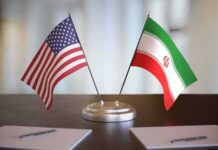
Trump, Xi, and Putin sat down together on November 19, 2026, marking the first reported trilateral summit between the leaders of the United States, China, and Russia. Yonhap News Agency confirmed the meeting happened in Shenzhen, China, during the Asia-Pacific Economic Cooperation (APEC) summit. Trump had pushed for nuclear-arms reduction to be part of the agenda, and reports say the topic took center stage once the three men sat down.
The three governments released a joint statement afterward. It said a nuclear war “cannot be won and must never be fought,” and promised the countries would talk about lowering nuclear risks and stopping the spread of nuclear weapons. Reuters called the meeting unprecedented, noting it brought together leaders whose countries hold the world’s largest nuclear arsenals under one roof for the first time.
Big Words, No Binding Deal
The declaration stopped short of any real arms-control agreement. Reuters reported it set no arms-control talks and no timetable for future negotiations, even though Trump had said he wanted to see nuclear weapons reduced. The statement also never mentions a trilateral nuclear treaty, something China has rejected for years because its own arsenal is much smaller than those of the United States and Russia.
The language in the declaration promises dialogue but gives no details on how that dialogue will work. There are no warhead limits, no inspection plans, and no deadlines written into the text. Without those pieces, the agreement reads more like a starting point for future talks than a finished deal between the three nuclear powers.
North Korea Left Out Of The Conversation
The joint declaration makes no mention of North Korea’s nuclear weapons program or the idea of denuclearizing the Korean Peninsula, Yonhap reported. That gap stands out because North Korea’s nuclear buildup remains one of the most urgent security concerns in the region, and its absence from the text raises questions about how complete the summit’s nuclear discussion really was.
Echoes Of A Cold War Promise
The phrase used in the new declaration closely matches one made by President Ronald Reagan and Soviet leader Mikhail Gorbachev back in 1985, when they said a nuclear war “cannot be won and must never be fought.” That earlier statement carried symbolic weight during the Cold War but was not itself a weapons-reduction agreement. Experts on nuclear policy say the same pattern may be repeating now, with broad language standing in for detailed commitments.
🌎 WORLD NEWS
🇺🇸 🇨🇳 🇷🇺 TRUMP, XI AND PUTIN HOLD HISTORIC TRILATERAL SUMMIT IN CHINA — NUCLEAR SECURITY AND GLOBAL POWER RELATIONS AT THE CENTRE OF TALKS
SHENZHEN, CHINA — 19 NOVEMBER 2026
US President Donald Trump, Chinese President Xi Jinping and Russian President Vladimir… pic.twitter.com/0CvhQzAEX3
— The Facts Global (@FactsGlobalNews) November 19, 2026
Press Access Limited During Summit
Journalists covering the APEC events faced restrictions that limited their ability to question officials or gather details in real time, NBC News reported. Those limits mean much of what the public knows about the summit comes from the official joint statement and government readouts rather than independent reporting from inside the room.
What Comes Next
Trump returned to the White House after the trip and told reporters he considers the summit a “win,” with a press conference planned to share more details. Whether the dialogue promised in the declaration turns into formal negotiations, with actual limits on nuclear arsenals, remains an open question. For now, the historic meeting stands as a diplomatic opening rather than a finished arms-control deal.
Sources:
facebook.com, edition.cnn.com, reuters.com, en.yna.co.kr, dw.com, nbcnews.com
© nationalusnews.com 2026. All rights reserved.