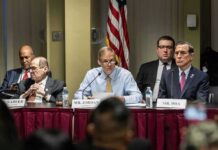

After a rare nationwide ground stop, Transportation Secretary Sean Duffy demanded $50 billion to replace the Federal Aviation Administration’s aging air-traffic systems.
Story Snapshot
- Duffy says overloaded, outdated routers and telecom gear destabilized radar and communications nationwide.
- The Federal Aviation Administration lifted the ground stop after hours of disruption and thousands of delays.
- Duffy raised his modernization ask to $50 billion after the outage, up from earlier pushes above $30 billion.
- Congressional records say lawmakers already funded key upgrades, shifting blame to agency execution.
What Triggered The Ground Stop
Federal officials said intermittent telecom failures hit multiple air traffic centers on Friday afternoon. Transportation Secretary Sean Duffy said overloaded, older routers led to unstable radar and communications at about 3:36 p.m. Eastern time, forcing the Federal Aviation Administration to halt departures nationwide for safety. The agency later lifted the order, but the stop had already rippled across the system for hours. Major airports struggled to recover as crews reset systems and sorted flight queues.
Duffy described the equipment as “old switches, old routers” that buckled under data load across air-route centers and terminal control facilities. He argued the breakdown showed why patchwork repairs are no longer enough. He said the government needs a full refresh of telecom, radar, software, and facilities to prevent another national shutdown. He said the decision to ground flights was made “out of an abundance of caution” to protect passengers and crews while signals and data feeds stabilized.
The $50 Billion Demand And The Political Stakes
After flights restarted, Duffy escalated his funding request, asking Congress for $50 billion in emergency money to overhaul the air-traffic system. Reporting shows he had spent months seeking at least $30 billion in added funds, then raised the target following the outage. Congress had previously approved $12.5 billion for aging facilities and technology, showing an ongoing push to update core systems even before this crisis. Reuters also reported the $50 billion request as the new administration position.
The size and speed of the ask hit raw nerves on the right and the left. Many conservatives see years of costly tech efforts that still fail under stress. Many liberals see an essential public system that leaders allowed to decay while risks grew. Both groups share a deeper worry: Washington reacts to crashes with big numbers but thin plans. People want proof that money will buy reliability, not another cycle of delays, excuses, and contract overruns.
Congressional Pushback And Oversight Concerns
A recent Senate hearing record challenged the idea that funding alone is the issue. It said the ground stop reflected the agency’s failure to modernize despite Congress providing needed resources. It also said lawmakers had fully funded Notices to Air Missions modernization for more than a decade. That framing shifts the debate from more cash to better management, clearer priorities, and faster delivery on the basics that keep planes moving safely.
The Republican-led Senate Commerce Committee has pointed to the need to replace outdated en-route centers ahead of other projects. Reports note Congress approved $1.9 billion for those centers, suggesting targeted steps are underway. The core disagreement now is not whether to modernize, but how to focus the work and how much to spend to fix the most fragile links first, without creating new weak points elsewhere.
Why History Says “Plan First, Then Spend”
Government watchdogs have warned for decades that Federal Aviation Administration modernization often runs over budget and behind schedule. The Government Accountability Office says recent efforts show progress but still lack full life-cycle cost estimates and sound schedules. Moving too fast can raise costs and cause more disruptions to air traffic. That history explains why many Americans distrust huge, urgent price tags unless they come with a detailed scope, milestones, and public scorecards.
Official updates: Transportation Secretary Sean Duffy (@SecDuffy) posted the timeline: telecom issues started ~3:36 p.m. ET at facilities/TRACONs, ground stop issued with 3,500+ planes airborne (all landed safely using standard procedures), airspace reopened at 8:15 p.m. ET. He… pic.twitter.com/LXXsLYtWPZ
— Todays World News (@TodaysWorldNews) November 14, 2026
Friday’s failure made the stakes clear. One tech bottleneck stranded travelers, hit airlines and workers, and dented confidence in a system that must run every minute. The fix needs to be as serious as the problem. Congress can require a transparent plan, strict cost and schedule controls, and clear priorities that harden telecom links, replace failing routers and switches, and retire the most fragile centers first. The country wants safer skies and honest stewardship—both at the same time.
Sources:
transportation.gov, abcnews.com, abc7.com, fidelity.com, businessinsider.com, cnn.com, washingtonexaminer.com, congress.gov
© nationalusnews.com 2026. All rights reserved.