
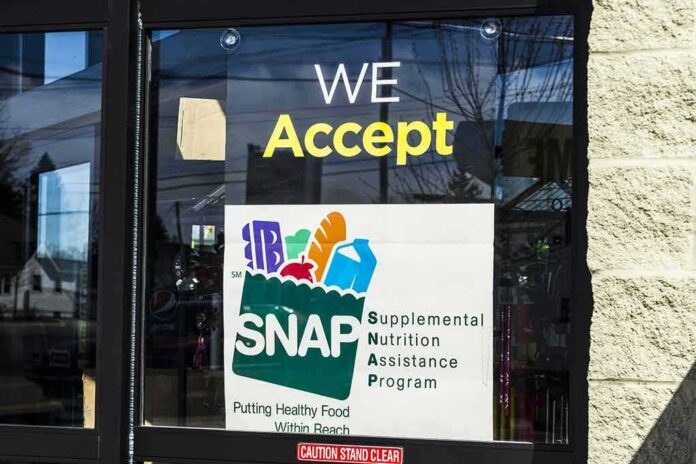
SNAP rules were widened to cover more adults up to age 64, and millions fewer people are now on food aid while grocery prices remain high, sharpening a fight over whether this is enforcement or a cut.
Story Highlights
- Federal guidance confirms expanded SNAP time limits now reach ages 18–64.
- Covered adults must work 20 hours weekly on average or face a three-month limit.
- Analysts and reporters say enrollment has fallen by 10–13% since mid-2025.
- Exemptions narrowed for some groups, raising concerns about food hardship.
What changed in federal SNAP policy
United States Department of Agriculture guidance says the One Big Beautiful Bill Act expanded who faces the time-limited SNAP rule from ages 18–54 to ages 18–64. The department describes how states must apply the change and notes several exceptions were removed or narrowed. This creates a clear channel for fewer adults to qualify for ongoing benefits even if their income has not changed. These steps are presented as enforcing the law as written.
Federal notices explain the time limit standard. Adults covered by the rule must work or be in an approved program for at least 20 hours per week, averaged to 80 hours per month. Those who do not meet the standard can usually receive only three months of benefits in a 36‑month window. The department also distinguishes this time limit from general work rules, which have different ages and exemptions. These mechanics shape who stays on or falls off SNAP.
How many people have left SNAP since mid‑2025
An Associated Press report said SNAP enrollment fell from about 42.2 million in May 2025 to 36.6 million in May 2026, a drop of about 5.6 million people, or roughly 13 percent. Marketplace reported a 10 percent decline by early July 2026 and quoted a Center on Budget and Policy Priorities expert saying more than 4 million people left from July 2025 to March 2026. These tallies frame the political fight but do not prove why each case closed.
NPR reported that the Congressional Budget Office estimated the work‑requirement changes would reduce average monthly participation by about 2.4 million people over 2025 through 2034. NPR also said the expanded rules now reach adults ages 55–64, some parents of teens, veterans, people experiencing homelessness, and young adults who aged out of foster care. These details explain why enrollment could fall even without a better job market.
Maine’s rules and what residents must do
Maine’s health department lists general SNAP work rules, like registering for work, responding to job contacts, and not quitting or cutting hours below 30 per week without good cause. The state also describes exemptions. These are separate from the federal time limit but interact with it. The rules show how paperwork, missed notices, or schedule changes can trip people up, even if they still qualify on income. They also show who remains exempt.
A Maine Secretary of State rule requires certain adults ages 16–59 in SNAP households to keep an active Maine JobLink account. It also outlines workfare and other compliance steps. These added steps can cause people to lose benefits for administrative reasons if they miss a deadline or do not complete an online task. The rule offers a window into how implementation details can shape real‑world participation, apart from household need.
Why the debate is fierce—and what we still do not know
House Democrats argue the law harms older adults and narrows waivers, while advocates warn of food hardship as groups lose exemptions. Supporters say the rules target aid to those who meet clear standards. Both sides point to the same fact: enrollment is down. The missing piece is a public, verified breakdown showing how many exits were due to higher earnings, new jobs, true ineligibility, or administrative hurdles like missed recertifications.
What would answer the hard questions
Clearer public data from the United States Department of Agriculture and states could resolve the dispute. Monthly participation with reasons for case closure would show if exits came from income gains or paperwork problems. Linked, privacy‑protected wage records could reveal whether people who left SNAP found steady work, or cycled back within months. Without those facts, Americans see a system that changes rules first and explains outcomes later, feeding distrust in both parties.
Sources:
thegatewaypundit.com, maine.gov, fna.usda.gov, usda.gov, commondreams.org
© nationalusnews.com 2026. All rights reserved.